
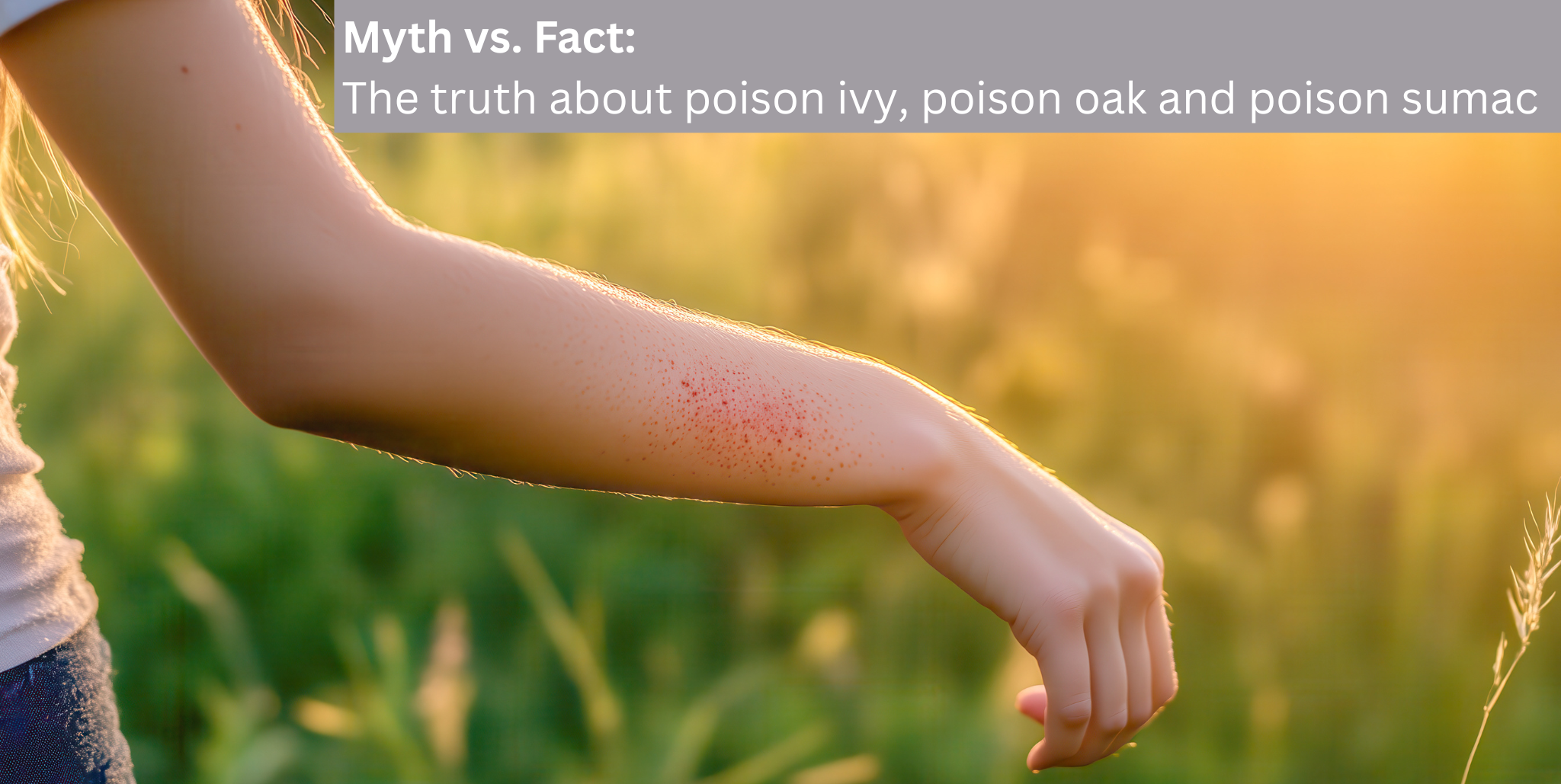
It’s summertime, which, for many, means spending time outdoors near grass, woods, shrubs, plants and trees. Doing that is beneficial but it can also come with risk.
However, a common occurrence is encountering poison ivy, poison oak, and poison sumac, causing millions of itchy rashes every year. Hometown Urgent Care cares about keeping you healthy and wants you to know the truth about these common rashes.
There are some common misconceptions out there.
So, let’s separate fact from fiction with these 10 myths vs. facts:
🌱 Myth #1:
“You only get a rash if the plant has leaves of three.”
✅ Fact:
“Leaves of three, let it be” is a helpful rule – but it’s not foolproof.
- Poison ivy and poison oak typically have clusters of three leaflets
- Poison sumac has 7–13 leaflets per stem
- Many harmless plants (like Virginia creeper or raspberry) also have three leaves
👉 Bottom line: Identify plants by multiple traits, not just leaf count.
🌱 Myth #2:
“The rash is contagious and can spread.”
✅ Fact:
The rash itself is NOT contagious.
- The reaction is caused by urushiol oil on the skin
- Once the oil is removed or absorbed, the rash cannot spread
- Blisters may leak fluid, but it does not contain urushiol
👉 If a rash appears to “spread,” it’s usually because:
- Oil was absorbed at different rates across the skin
- Some areas had more exposure than others
🌱 Myth #3:
“You’ll notice exposure immediately.”
✅ Fact:
Symptoms are often delayed.
- Rash may appear 12–72 hours after contact
- First-time exposure can take even longer
- Sensitivity varies from person to person
👉 This delay is why many people don’t realize what caused their rash.
🌱 Myth #4:
“You can’t get poison ivy in winter.”
✅ Fact:
The plants are dangerous year-round.
- Urushiol oil is present in:
- Bare stems
- Roots
- Dead plants
- Even in winter, touching vines can trigger a reaction
👉 Always be cautious—even when leaves are gone.
🌱 Myth #5:
“Animals spread the rash.”
✅ Fact (with nuance):
Animals don’t get the rash – but they can carry the oil.
- Pets’ fur can pick up urushiol
- Touching contaminated fur can transfer it to your skin
👉 Wash pets if they’ve been in wooded or brush-heavy areas.
🌱 Myth #6:
“Burning these plants is safe.”
❌ Myth – and very dangerous
✅ Fact:
Burning poison ivy, oak, or sumac can cause severe internal reactions.
- Urushiol becomes airborne in smoke
- Inhalation can lead to:
- Lung irritation
- Serious respiratory distress
👉 Never burn these plants! Instead, remove them safely.
🌱 Myth #7
“If I didn’t react before, I’m immune.”
✅ Fact:
Sensitivity can develop over time.
- Many people become more allergic with repeated exposure
- Even if you’ve never reacted before, you still can
👉 No one should assume they’re immune.
🌱 Myth #8:
“Scratching causes it to spread.”
✅ Fact:
Scratching does NOT spread the rash – but it can make things worse.
- It can:
- Break skin
- Lead to infection
- Increase irritation
👉 Keep nails short and treat itching to avoid complications.
🌱 Myth #9:
“You can catch it from clothing later.”
✅ Fact:
Yes, urushiol can linger on surfaces.
- Oil can remain active on:
- Clothing
- Shoes
- Tools
- Gear
👉 Always wash anything exposed:
- Use detergent and warm water
- Clean tools with rubbing alcohol or soap
🌱 Myth #10:
“Home remedies always work.”
✅ Fact:
Some help, but not all are effective.
- Helpful:
- Washing skin ASAP (within 10–15 minutes if possible)
- Oatmeal baths
- Hydrocortisone cream
- Less proven:
- Vinegar, bleach, or harsh remedies (can irritate skin further)
👉 For severe cases, a doctor may prescribe stronger treatments.
🌱 Key Differences Between the Plants
| Plant | Leaf Pattern | Typical Habitat | Distinct Feature |
| Poison Ivy | 3 leaflets | Forests, lawns, climbing | Can grow as a vine |
| Poison Oak | 3 lobed leaflets (oak-like) | Dry, wooded areas | Wavy leaves |
| Poison Sumac | 7–13 leaflets per stem | Wetlands/swamps | Red stems |
✅ When to be seen
Most poison ivy, oak, and sumac rashes can be treated at home—but some situations require professional care. Visit a Hometown Urgent Care near you if you experience a rash that:
- Covers a large portion of your body (roughly 20–25% or more)
- Is extremely painful, intensely itchy, or heavily blistered
- Is in a sensitive area such as eyes or eyelids, mouth, lips, throat or genitals
- Shows signs of infection
- Pus draining from blisters
- Increasing redness, warmth, or swelling
- Red streaks from the rash
- Fever over 100°F (37.8°C)
- Rash lasts more than one to two weeks
- Symptoms worsen despite home treatment
We’re Here When You Need Us
At Hometown Urgent Care, we provide fast, affordable care for minor illnesses and injuries — no appointment needed. Whether you want peace of mind before you travel or need care when you return, we’re here to help you feel your best.
Have a safe and healthy summer — and don’t forget we’re here if you need us!